
"Angola coffee exports"
200 article(s) found

Flavor description treatment of Angolan coffee beans introduction to the taste of varieties in producing areas
Since the end of the civil war, the political situation in Angola has remained stable. In September 2008, Angola successfully held its first multi-party parliamentary election since 1992, and the Ann Movement won more than 80% of the seats. In February 2010, the National Assembly of Angola adopted a new constitution. On August 31, 2012, Angola held its first presidential and parliamentary elections since the constitutional amendment. The Anren Movement won the election with 71.84% of the vote, and dos Santos was re-elected.
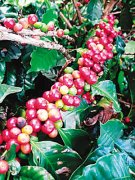
Angolan boutique coffee used to be a big coffee producer, but its future is now uncertain.
Once a big coffee producer, the future is now uncertain. In the mid-1970s, Angola (Angola) exported 3.5 million bags of coffee a year, 98 per cent of which was Robbins (probably the best in Africa), but total production fell to 200000 bags in 1990. The best brands in Angola used to be Ambriz, Amborm and No

Basic knowledge of Angolan fine coffee beans from coffee producing area
In the mid-1970s, Angola (Angola) exported 3.5 million bags of coffee a year, 98 per cent of which was Robbins (probably the best in Africa), but total production fell to 200000 bags in 1990. The best brands in Angola used to be Ambriz, Amborm and Novo Redondo, all of which are consistent

Description of the Flavor of Angolan Coffee Bean; introduction to the manor of variety producing area
The Angolan government is currently working on a development plan to revitalize coffee production in order to restore coffee production across the country to the level of the 1970s. Manuel Dias, director of the Angolan Coffee Agency, recently told the local press that the Angolan government's plan mainly includes expanding growing areas, increasing investment, working hard to support coffee farmers and promoting fine varieties. Uige, Bengo

Coffee producing area-Angola
Used to be a big coffee producer, but now its future is uncertain

Angolan coffee used to be a big coffee producer.
Once a big coffee producer, the future is now uncertain. In the mid-1970s, Angola exported 3.5 million bags of coffee a year, 98 per cent of which was Roberts (probably the best in Africa), but total production fell to 200000 bags in 1990. The best brands in Angola used to be Ambriz, Amborm and Nov

Angola coffee beans Africa's best Robbins waiting coffee African coffee varieties
High-quality coffee beans are refined by water treatment. The coffee beans with less impurities can be obtained by the water washing method, but if the water quality and time are not properly controlled during the fermentation process, the coffee beans will easily be infected with the sour taste of excessive fermentation. and dry beans also need to pay attention to timely re-inspection to prevent coffee beans from being contaminated by wet ground and sundries. Processed

Introduction of high quality Angora coffee bean flavor description and processing method for taste production of varieties
The rivers in Angola radiate from the Bier plateau in the center, and the north flow is mostly a tributary of the Congo River. The southeast flows more into the Sanbixi River. Its mainstream source is also in northeastern Angola. The lower reaches of the Kune River, which flows to the southwest, forms the boundary river with Namibia. All the rivers flowing to the west flow into the Atlantic Ocean, with the Kuansha River as the largest, and all enter the sea from Luanda. [5] Resources, oil, natural

The present situation of Angolan coffee industry. How about Angolan coffee? how much are the Angolan coffee beans per jin?
For more information on coffee beans, please follow the coffee workshop (official Wechat account cafe_style). According to the National Coffee Association of Angola, the export revenue of Angolan coffee reached US $2 million in 2015. Angolan newspaper Jornal de Angola reported this week that this income was 262 percent higher than US $552000 in 2014 and 207 per cent higher than US $650000 in 2013. It is reported that this growth is significant.

Introduction to the characteristics of Angolan coffee _ is the price of Angolan coffee expensive _ what is the taste of Angolan coffee
For more information on coffee beans, please follow the coffee workshop (Wechat official account cafe_style), once a big coffee producer. In the mid-1970s, Angola (Angola) exported 3.5 million bags of coffee a year, 98 per cent of which was Roberts (which is probably the best Robbins coffee in Africa). In 1990, total production dropped to 200000.

This paper briefly introduces the characteristic growing environment of Angolan coffee beans, Burundi coffee beans and Cameroon coffee beans.
Professional coffee knowledge exchange more coffee bean information Please follow Coffee Workshop (Wechat official account cafe_style) Angola was once a big coffee producer. In the mid-1970s, Angola (Angola) exported 3.5 million bags of coffee a year, 98% of which was Robex (which may be the best Robbins coffee in Africa). In 1990, total production dropped to 20%.

San Cristobal in the Venezuelan coffee-producing region of Tazira
The best coffee names in Venezuela are: Montebello in San Cristobal (San Cristbal de Tachira) in Tazira, Miramar in Rubio (Rubio de Tachira) in Tazira, Granija in Timothe (Timote de Merida) in Merida, and Santa Ana in Tacira (San)

Is Angolan coffee grown in Angola, the fourth largest coffee producer, good?
Professional coffee knowledge exchange more coffee bean information please follow the coffee workshop (Wechat official account cafe_style) mention Africa, people's first impressions are: desert, drought, tribe, poverty, mystery and so on. Because of its climatic environment, it has become a paradise for the growth of coffee trees. Angola is one of the fourth largest coffee producers in the world. From 1975 to 1976, every country

The best brands of Angolan coffee beans used to be Ambrish, Ambalim and New Ridondo.
Professional Coffee knowledge Exchange more Coffee Bean Information Please follow Coffee Workshop (Wechat official account cafe_style) comes from the most primitive wild jungle in Ethiopia, where coffee trees grow naturally under the protection of rainforest trees, and litter is the best natural organic fertilizer. Many people recognize it.
Which coffee producing countries mainly produce what kind of beans?
Professional coffee knowledge exchange more coffee bean information please follow Coffee Workshop (Wechat official account cafe_style) Angola is one of the fourth largest coffee producers in the world. Although it produces only a small amount of Arabica beans, it is famous for its high quality. The coffee produced has a rich taste and mellow flavor. Before the independence of Angola, food was not only self-sufficient, but also exported in large quantities. It is known as Southern Africa.
The best brands of Angolan coffee beans used to be Ambrish, Ambalim and New Ridondo.
Professional Coffee knowledge Exchange more Coffee Bean Information Please follow Coffee Workshop (Wechat official account cafe_style) comes from the most primitive wild jungle in Ethiopia, where coffee trees grow naturally under the protection of rainforest trees, and litter is the best natural organic fertilizer. Many people recognize it.
Members of the International Coffee Organization: importing and exporting members
Angola Austria Austria Benin Benin Belgium / Luxembourg Belgium/Luxemburg Bolivia Bolivia UK Britain Brazil Brazil Cyprus Cyprus Burundi Burundi Denmark Denmark Cameroon Cameroon Finland Finland Central African Republic Central African R.

Boutique Coffee introduction of 53 Coffee producing areas in the World 4
twenty-three. Angola, once a big coffee producer, exported 3.5 million bags of coffee a year in the mid-1970s, 98 per cent of which was Roberts (probably the best in Africa), but total production fell to 200000 bags in 1990. The best brands in Angola used to be Ambriz and Amborm.
Basic knowledge of fine coffee Member of International Coffee Organization
Importing Member States Exporting Member States Angola Austria Austria Benin Belgium/Luxembourg Bolivia Bolivia United Kingdom Brazil Cyprus Cyprus Burundi Denmark Cameroon Finland Central African Republic Central African R.
International Coffee Organization member Fine Coffee Bean Organization
Angola Austria Austria Benin Benin Belgium / Luxembourg Belgium/Luxemburg Bolivia Bolivia UK Britain Brazil Brazil Cyprus Cyprus Burundi Burundi Denmark Denmark Cameroon Cameroon Finland Finland Central African Republic Central African R.